The textured crop is the haircut for the man who wants to look like he made an effort and would rather not make one. It takes thirty seconds to style, it hides a receding corner, it survives a subway platform in August, and it passes in every office between Park and Lexington. We cut more of them on weekday mornings than any other scissor cut.
A textured crop is a short haircut with one to two inches on top, cut choppy with the points of the scissors so the pieces separate, pushed forward into a short blunt fringe, over sides that are tapered or faded. It is $35 at Deja Vu as a classic scissor cut or a fade, takes about 30 minutes, and ends with a hot towel on the neck.
What a textured crop haircut is
A textured crop is defined by three things: short length on top, texture cut into that length rather than styled into it, and a forward direction that ends in a fringe. Take any one of those away and it is a different haircut. Short with no texture is a crew cut. Textured but swept back is a quiff. Forward but blunt and heavy is a bowl.
The texture is the part people miss. A barber creates it by point cutting, which means cutting into the ends of the hair at an angle with the tips of the scissors so each section ends at slightly different lengths. The hair then separates into pieces instead of lying as a single sheet. It is scissor work, not clipper work, which is why the top of a crop is cut the way our classic scissor cuts are, even when the sides are faded.
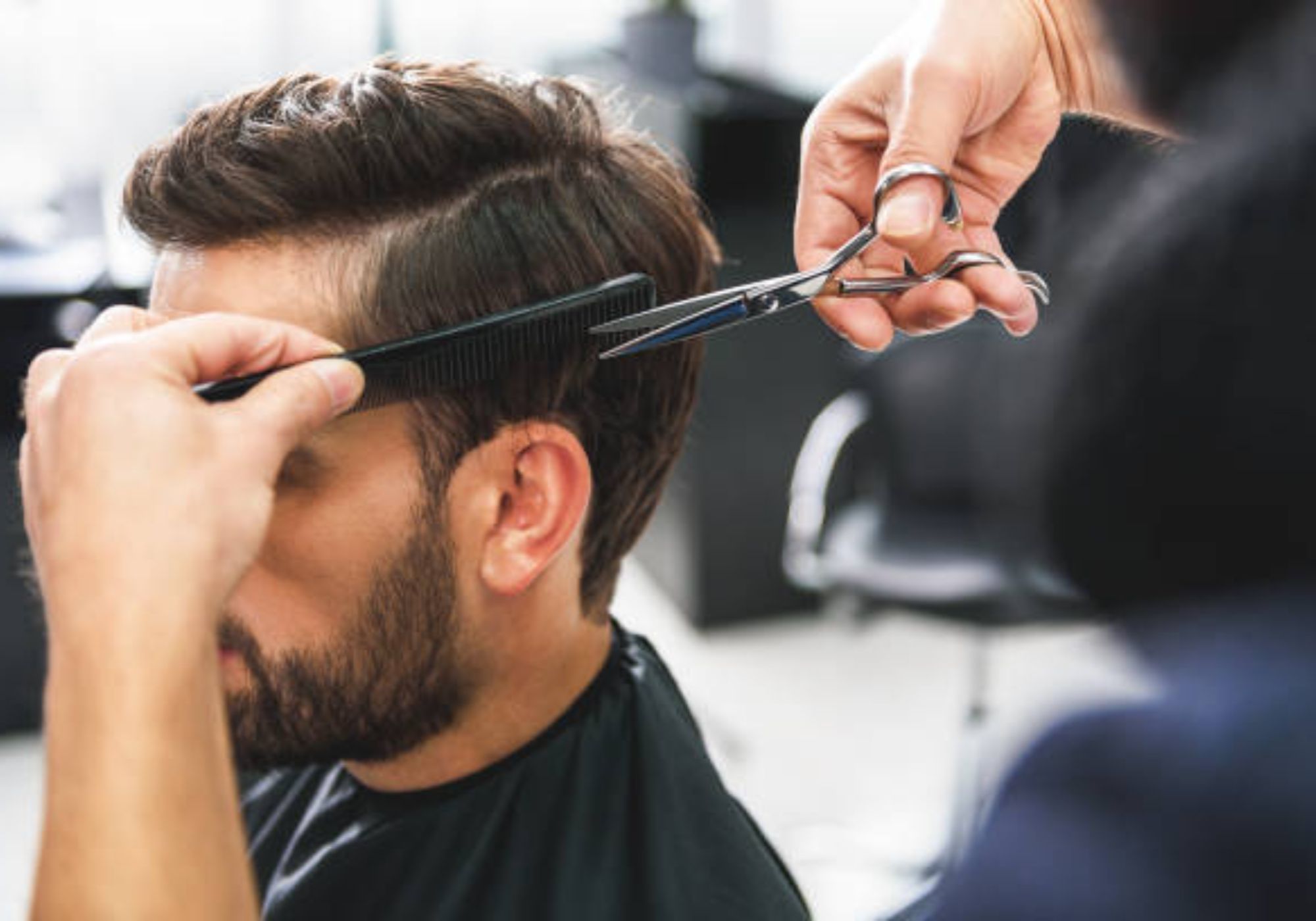
It is popular because it solves problems. A high forehead or receding corners disappear under the fringe. Thick hair that will not cooperate gets its weight removed. Fine hair looks fuller because matte texture reads as density. And the whole thing styles with one product and no mirror. For a man who leaves the apartment at 7:30 and sits in meetings until 6, that is the whole pitch.
Textured crop vs French crop
A French crop is a textured crop with a blunt, straight fringe and usually a slightly heavier, smoother top. A textured crop breaks the fringe up with the scissors and keeps more separation through the whole top. Same family, different finish.
| Feature | Textured crop | French crop |
|---|---|---|
| Fringe | Broken up, pieces of different length | Cut straight across, blunt |
| Top | Choppy, separated, matte | Smoother, more weight, can carry light shine |
| Sides | Any fade or taper | Usually a high fade or undercut |
| Reads as | Relaxed, modern | Sharper, more deliberate |
| Office fit | Every office | Most offices; the blunt fringe is a stronger statement |
| Grow out | Forgiving, texture hides growth | Fringe line shows growth sooner |
In practice most men in Midtown want the textured version and call it a French crop, and the barber will ask which fringe you want before cutting. If you want it to look like you did nothing, say textured. If you want the fringe to be a line, say blunt.
Textured crop variations
The top stays the same across every variation; the sides, the fringe length and the hair texture change. These are the versions we cut in a normal week.
By the sides
- Crop with a low taper: the softest version. Sides at a 2 or 3 with skin only at the sideburn and nape. The office default.
- Crop with a mid fade: the blend starts at the temple. More contrast, the most requested version with men under 40.
- Crop with a high skin fade: the loudest version, with the top sitting like a cap over bare sides.
- Crop with an undercut: sides at one short length with no blend and a visible step to the top. A stronger look, less common in offices.
- Crop with a taper fade: skin at the edges, a tight low blend, the grow out of a taper. Every level is on our fade haircuts page.
By the fringe
- Short crop: half an inch to an inch on top, the fringe barely reaches the hairline. Zero styling.
- Standard crop: about an inch and a half, fringe to the middle of the forehead.
- Long crop: two inches plus, the fringe close to the brow, needs a dryer to sit right.
- Crop with a textured fringe over a low taper: the viral version, covered in our post on the low taper fade with textured fringe.
By hair type
- Straight: the cleanest version, with the texture showing as separate pieces.
- Wavy: the wave makes its own texture, so the barber point cuts less and the dryer is optional.
- Curly: becomes a curly crop, with the curls shaped at the front instead of a straight fringe.
- Thick: weight removed with thinning shears so the top does not sit heavy on the forehead.
- Fine or thinning: kept short and matte, the single best cut for a thinning crown because the texture hides it.
Choosing the right crop for your hair type and face shape
The crop suits oval, square, round and long faces, straight to curly hair, and every density. The only face it fights is a very short forehead, and the only hair it fights is extremely fine hair worn long on top. Everything else is a matter of picking the fringe length and the sides.
Face shape
- Oval: any version. Standard crop with a low taper or mid fade.
- Round: shorter fringe, a little height at the front with the dryer, mid fade for narrower sides.
- Square: standard crop with a low taper; the strong jaw carries the clean sides.
- Long or high forehead: long crop with the fringe worn low. The cut exists for this face.
- Heart: standard crop with the sides left at a 3 for a bit of width at the jaw.
- Short forehead: short crop with the fringe pushed up rather than down, or a quiff instead.
Hair type
Straight and wavy hair get the full textured treatment. Curly hair gets a curly crop. Thick hair needs weight out of the top. Fine hair needs the top kept at an inch or so and a matte product, and it should never go bare at the sides with a high skin fade, because the exposed scalp makes the thin top look thinner. The barber will suggest the sides after feeling the density, and the suggestion is usually a low taper.
Lifestyle
If you cycle to work, wear a helmet, or sweat through a lunchtime workout, the short crop is the version that recovers with a splash of water and a push forward. If you sit across from clients all day, the standard crop with a low taper looks the most considered. If you want the cut to carry a little attitude on weekends, the mid fade version does that without changing anything on top. The crop is the rare haircut where the sides change the message and the top stays the same.
How to ask your barber for a textured crop
Say “textured crop, about an inch and a half on top, point cut, fringe worn forward above the brow, and” then the sides. “Low taper, skin at the edges, 2 on the sides” is the most common finish to that sentence. A photo helps for the fringe; the words cover everything else.
- Length on top: half an inch, an inch and a half, or two inches plus. Say the number.
- Texture: point cut, or choppy. If you say textured the barber hears point cut.
- Fringe: textured or blunt, and where it sits: at the hairline, mid forehead, or near the brow.
- Sides: low taper, mid fade, high fade or undercut, and the guard: 2 or 3 is normal.
- Bottom: skin or a half guard at the sideburn and nape.
- Neckline: natural or tapered. Not blocked, which fights the soft top.
If you have thick hair, add “take the weight out.” If you have fine hair, add “keep it matte, not too short on top.” And if your last crop sat like a bowl, say so: it means the fringe was cut blunt and not broken up, and that is a two sentence fix.
How to style a textured crop
Towel dry, a pea of clay between the palms, push forward with the fingertips, done. The whole routine is thirty seconds, and the cut was designed so that it is. The only variable is whether the fringe needs ten seconds of blow dryer to sit forward first.
- Wash or wet the hair, then towel dry until it is damp. Damp, not wet. Water should not drip.
- If the fringe wants to stand up or go sideways, aim the dryer forward from the crown for ten seconds while pushing the hair forward with your free hand. Long crops always need this; short ones rarely do.
- Take a pea of clay or paste, rub it between your palms until it is warm and invisible.
- Push your fingers through the top from the back toward the front, so the crown gets the most product and the fringe gets the least.
- Pinch a few pieces at the front to separate them. Do not comb; a comb flattens the texture you paid for.
- Brush the sides down with whatever is left on your hands.
Wavy hair can skip the dryer and the pinching; the wave does it. Curly crops take a curl cream on damp hair and are left alone to dry. Fine hair benefits from a sea salt spray before the clay, which adds grit so the pieces hold apart.
Midday fix: if the fringe has flattened by 3pm, wet your fingertips, push the top forward again and pinch the front pieces apart. The clay still in the hair reactivates with a little water, which is the reason to choose clay over pomade for this cut.
The best products for a textured crop
One product does the job: a matte clay for most men, a paste if you like to rework it during the day. Everything else on the shelf is optional. Shine is the enemy of texture, so pomade stays in the drawer unless you want a sleek French crop.
| Product | Finish | Hold | Use it for |
|---|---|---|---|
| Texture clay | Matte | Strong | The default. Separation that lasts all day on straight, wavy, thick or fine hair. |
| Molding paste or fiber | Low shine | Medium, reworkable | Men who touch their hair during the day and want to reshape it at 2pm. |
| Sea salt spray | Matte | Light, pre styler | Fine or very straight hair that needs grit before the clay. |
| Styling cream | Natural | Light | Long crops and wavy hair that only need direction, not hold. |
| Curl cream | Natural | Light | Curly crops, applied to damp hair and left alone. |
| Pomade | Shine | Medium | Only for a sleek French crop with a blunt fringe. |
Amount: a pea. Fine hair gets half a pea. If the pieces look wet or clump into strands you used too much, and the fix is a rinse rather than more pushing. Wash every two or three days with a plain shampoo so clay does not build up, and condition the ends if the top is over an inch and a half.
Maintaining a textured crop
A crop looks right for about three weeks and acceptable for four, because the texture hides growth and the fringe only needs to stay above the brow. The sides decide the schedule: a low taper gives you four weeks, a skin fade gives you two.
| Version | Full cut every | Line up in between | Monthly cost |
|---|---|---|---|
| Crop with low taper | 4 weeks | Optional at day 14, $18 | $35 to $53 |
| Crop with mid fade | 3 weeks | Day 10 to 12, $18 | $53 |
| Crop with high skin fade | 2 weeks | Not needed | $70 |
The daily routine is the thirty seconds above. The weekly routine is nothing. The monthly routine is a visit. Between visits, do not trim your own fringe; a straight line cut in the bathroom mirror is never straight, and a crooked fringe is the most visible mistake on the whole head. If the fringe reaches the brow before the sides grow out, ask for a fringe dusting with your line up and the barber will take an eighth of an inch off the front in about five minutes. Our guide to how often you should get a haircut has the schedule for every style on the menu.
Get a textured crop at Deja Vu Barbershop
The textured crop is $35 at Deja Vu whether you take it with a scissor taper or a fade, cut by New York State licensed barbers with 15 plus years of experience on the team, with a hot towel on the neck at the end. Add a beard trim for the Classic Combo at $48. The scissor work on top is the same craft as our classic scissor cuts.
Deja Vu Barbershop is at 101 E 34th St between Park and Lexington in Murray Hill, two minutes from the 6 train at 33rd Street and about eight minutes from Grand Central. Hours are Monday to Friday 8am to 7pm and Sunday 10am to 5pm, closed Saturday. Walk ins are always welcome, or book online. Call (212) 576-1062 with questions.
Questions readers ask
Is a textured crop a scissor cut or a clipper cut?
Both. The top is cut and point cut with scissors, which is where the texture comes from, and the sides are tapered or faded with clippers. At Deja Vu it is $35 either way.
Does a textured crop work with a receding hairline?
Yes, it is one of the best cuts for one. The fringe is worn forward over the corners and the texture draws the eye to the top rather than the hairline.
How short is the top on a textured crop?
Usually one to two inches. Half an inch gives a very short crop with almost no fringe; two inches plus gives a long crop that needs a dryer to sit forward.
Can I wear a textured crop without product?
Yes, if the hair is thick or wavy and the top is short. Straight or fine hair holds its texture much better with a pea of matte clay, which takes about thirty seconds.