Every man has a number. For some it is two weeks, for some it is two months, and for a surprising number of men in Midtown it is “whenever my wife mentions it.” The right number is not a personality trait. It is a function of how short the cut is, how fast your hair grows, and how much the style depends on a clean edge.
The short answer: a fade every two to three weeks, a classic scissor cut every four to six, a longer style every eight to twelve, and a line up in between if the hairline and neck outrun the rest. Hair grows about half an inch a month for most men, so the question is really how much of that half inch your cut can absorb before it stops looking like the cut you paid for.
How to know it is time for a haircut
When the shape has changed, not when the length has. A haircut is a shape. Length is just the material. The day the shape stops being what the barber made is the day you are due, and for most styles that is sooner than the calendar suggests.
The tells are consistent across styles. The neckline has a fuzz line below where it was cut. The hair over the ears has started to curl out or stand. The top needs more product than it did last week to do the same thing. On a fade, you can see where the blend used to be, because there is now a visible step. On a scissor cut, the sides have caught up to the top and the whole head looks the same length.
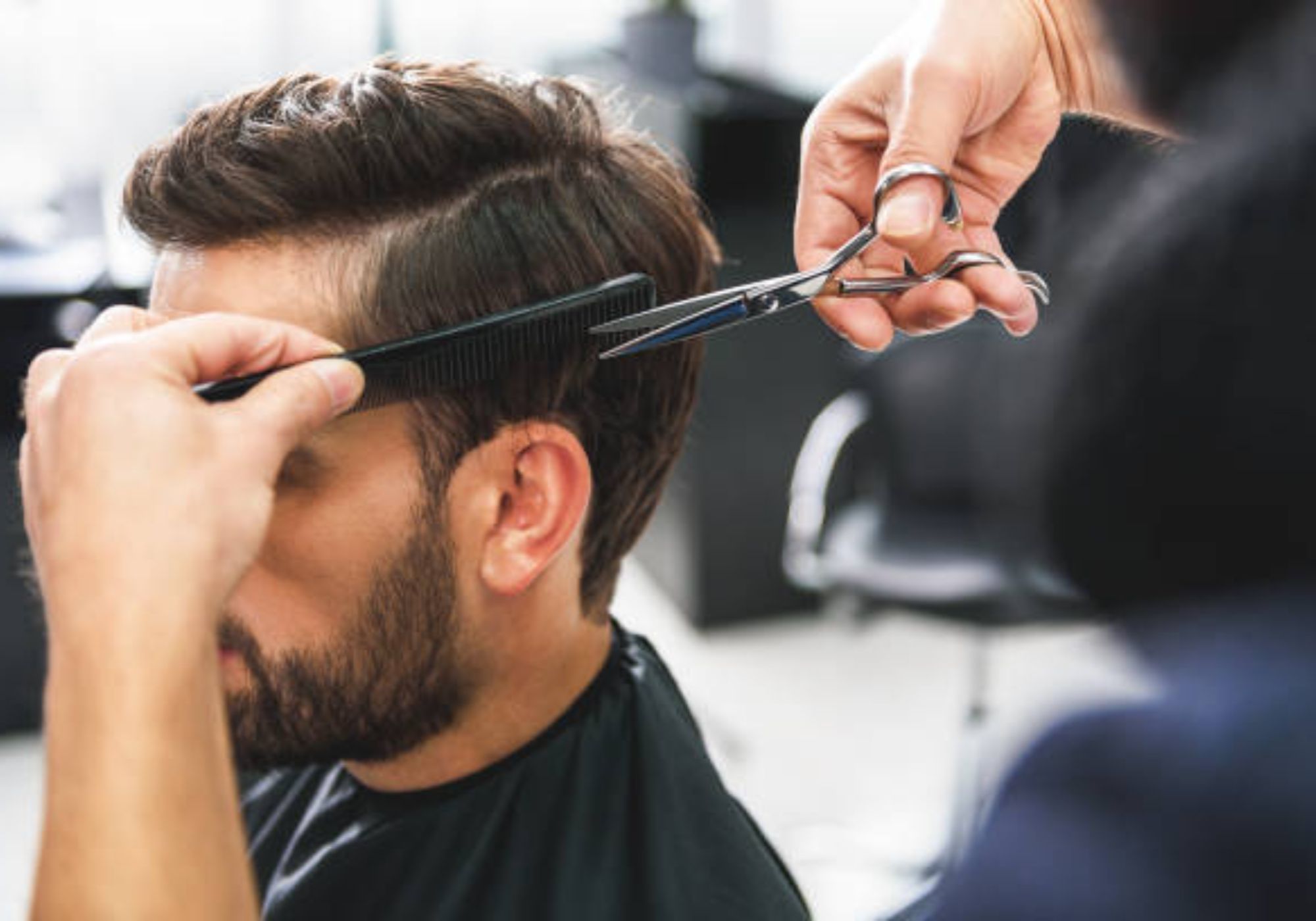
There is one more tell that has nothing to do with hair: you have started wearing a hat to the office. That is week five on a fade, in our experience.
Do frequent haircuts make hair grow faster?
No. Hair grows from the follicle, and the follicle has no idea what is happening at the other end. Cutting the ends does not signal anything to the root. The half inch a month figure holds whether you cut every two weeks or every two years.
What frequent cuts do is make hair look healthier, which is where the myth comes from. Split ends and damaged tips are removed before they travel up the strand, so the hair that is there looks thicker and holds its shape. On short men’s hair this matters less than on long hair, because the ends are never old enough to split. On a flow or a longer style it matters a lot. Trimming is maintenance, not fertilizer.
How often to get a haircut, by style
This is the table we would hand you if you asked at the chair. The weeks are the point at which the cut stops looking fresh, not the point at which it looks bad. Push each by a week if nobody at your office would notice, and pull each by a week if you have a client facing job.
| Style | Come back every | Why | At Deja Vu |
|---|---|---|---|
| Skin fade | 2 weeks | Regrowth on bare scalp shows by day five | Fade $35 |
| Low, mid or high fade | 2 to 3 weeks | The blend turns into a step around week three | Fade $35 |
| Taper | 4 to 5 weeks | Only the edges are short, so only the edges grow out | Fade $35 |
| Buzz cut | 3 to 4 weeks | One length grows out evenly but loses its edge | Fade $35 |
| Classic scissor cut, side part, crew | 4 to 6 weeks | Scissor work absorbs growth better than clipper work | Scissor cut $35 |
| Textured crop or quiff | 4 to 5 weeks | The top loses its texture before the sides look long | Scissor cut or fade $35 |
| Flow or longer style | 8 to 12 weeks | Shape is loose by design; trims remove weight and split ends | Scissor cut $35 |
| Kids | 4 to 6 weeks | Kids’ hair grows fast and the shape is simple | Kids cut $35 |
| Line up only | Every 10 to 14 days | The hairline and neck are the first things to blur | Line up $18 |
The pattern is simple. The more the style relies on a short edge, the sooner it needs a return. Every service on that table, with its price, is on our full price list.
Short hair and fades: two to three weeks
A fade is the shortest lived haircut on the menu, because a fade is a gradient and a gradient only works at the lengths it was cut. Add a quarter inch everywhere and the gradient is still there, but it has moved up and softened. Add a half inch and it is a step.
Skin fades
Two weeks, no argument. Bare scalp shows stubble by day five, and on dark hair it reads as a shadow by day seven. If you cannot keep that schedule, ask for a shadow fade or a taper instead. The skin fade is the best looking cut on day one and the worst looking on day twenty.
Low, mid and high fades
Two to three weeks. A low fade lasts closest to three; a high fade closest to two, because more of the head is in the gradient. If you are choosing a fade for the first time and want the longest life, start low. Our fade haircuts page shows the heights side by side.
Tapers and buzz cuts
A taper is the long life option: four to five weeks, because only the neck and sideburns are short and the rest grows out as one piece. A buzz cut goes three to four weeks; it never looks wrong, it just stops looking intentional.
Scissor cuts and medium length: four to six weeks
A scissor cut absorbs growth. The barber cuts the top and sides to lengths that relate to each other, and when both grow a half inch the relationship mostly holds. That is why a side part at week five still looks like a side part, while a fade at week five looks like a mistake.
The things that drift first on a scissor cut are the neckline, the hair over the ears and the weight on top. Around week four the sides start to push out and the top takes more product to lie where it should. Around week six the whole head looks the same length. Book between those two points. A $18 line up at week three resets the edges and makes a six week schedule look like a four week one, which is the trick most men in Murray Hill use.
Long hair, curly hair, fine hair and thinning hair
The texture exceptions. Each of these changes the number, and in one case it changes the direction.
Long hair and flow
Eight to twelve weeks between trims, not cuts. A flow is a grow out, so the goal is to remove weight and split ends without losing length. Go more often during the awkward phase around the ears; our guide to the men’s flow haircut explains how to get through it without a hat.
Curly and coily hair
Curls hide growth. A half inch of growth on a curl shows as less than a half inch of length, so most curly cuts stretch a week or two past the straight hair number. The exception is a fade or line up on curly hair, which grows out just as fast at the edges.
Fine hair
Fine hair shows weight fastest. A quarter inch too long and it lies flat. Cut on the shorter end of each range above, and keep the layers fresh so the hair looks like more than it is.
Thinning hair
Shorter and more often. A thinning top looks fuller when it is kept short enough that the scalp does not show through length, which usually means a cut every three to four weeks even on a scissor style. Long hair combed over thin spots has the opposite effect, and every barber will tell you so if you ask.
Haircut vs trim vs line up
Three different services, three different prices, three different jobs. Knowing which one you need saves a trip and a few dollars.
- Haircut. The full shape is recut: top, sides, neck and ears. $35 for a fade, scissor cut or kids cut. This is the every two to six weeks visit.
- Trim. The shape stays and the length comes down, usually a quarter to a half inch. Same price as a haircut at most shops, including ours, because it takes the same chair time. Long hair is trimmed; short hair is cut.
- Line up and edge up. Only the hairline, sideburns and neckline are sharpened. $18 at Deja Vu. This is what you get at day ten to fourteen when the cut is still fine but the edges have blurred.
The combination most of our office clients settle into: a full cut every four weeks and a line up at the two week mark. That is $53 a month for a haircut that never looks older than two weeks. The Sharp Edge package, a line up plus a beard trim, is $30 and fits the same slot if you wear a beard. Our guide on tipping your barber covers the rest of the bill.
What happens when you skip, and how to stretch a cut
Nothing dramatic happens to the hair. Something gradual happens to the haircut. Around week five on a short cut, the shape is gone and you are growing it out whether you meant to or not. Around week eight, the back is long enough to curl over a collar, and the next cut takes longer because the barber is removing more and starting the shape from scratch.
If you want to stretch a cut, there are three honest ways to do it. One, choose a longer life cut in the first place: a taper or a scissor cut over a skin fade. Two, get a line up at the halfway point; it is $18 and resets the three things people notice first. Three, wash less and use less product as the cut ages, because clean hair with weight in it lies flatter and hides growth better than hair with a week of paste in it. When the day comes, our guide on washing your hair before the cut covers the prep.
What does not work: trimming your own neckline with a beard trimmer in a two mirror setup. We fix that one every week. It is almost always crooked, and it is always too high, which moves the whole neckline up and makes the next real cut harder.
Keep a schedule at Deja Vu Barbershop
Deja Vu Barbershop is at 101 E 34th St between Park and Lexington in Murray Hill, two minutes from the 6 train at 33rd Street and eight from Grand Central. We are open Monday to Friday 8am to 7pm and Sunday 10am to 5pm, closed Saturday, which makes a before work cut every other week or a Sunday cut once a month a realistic routine rather than a plan. Every barber is New York State licensed, every haircut ends with a hot towel on the neck, and every price is published so there is nothing to negotiate in the chair.
Walk ins are always welcome. Book online if you want a set time, or call (212) 576-1062 to ask about the wait.
Questions readers ask
How often should I get a haircut if I work in an office?
Every two to three weeks for a fade, every four to six for a scissor cut, with a $18 line up at the halfway point if your job is client facing. The line up is what keeps a four week cut looking two weeks old.
Does getting a haircut every two weeks damage hair?
No. Cutting hair has no effect on the follicle, and short hair never gets old enough to split. Two weeks is normal for a skin fade and common for any fade in Manhattan.
How often should I trim long hair I am growing out?
Every eight to twelve weeks, and more often around the ears during the awkward phase. Ask for a trim that removes weight and split ends, not length.
Is a line up enough between haircuts?
For ten to fourteen days, yes. It sharpens the hairline, sideburns and neckline, which are the first things to blur. It does not fix a fade that has grown into a step; that needs the full cut.
Should thinning hair be cut more or less often?
More often, and shorter. A short top hides a thinning crown better than length does, so every three to four weeks even on a scissor style.